
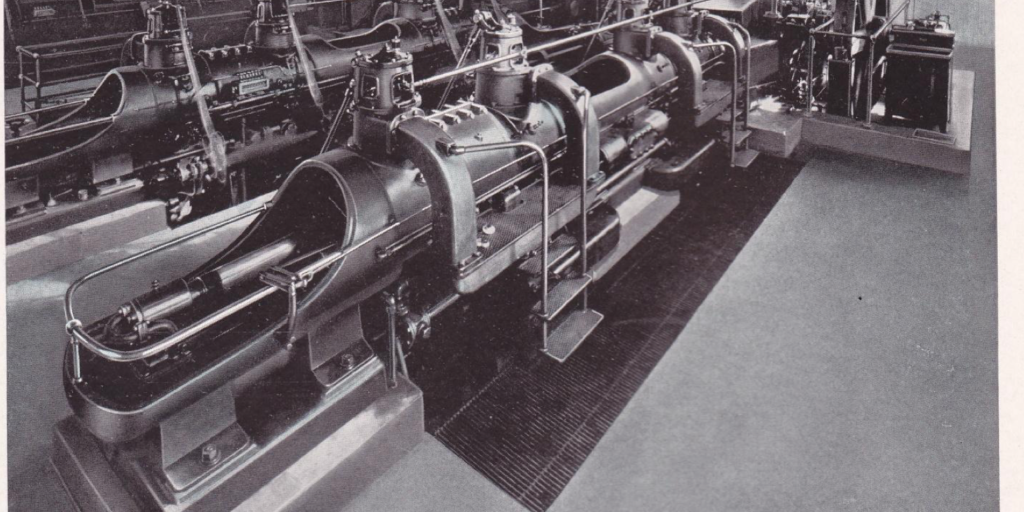
From Steamboats to Safety Codes: The Historical Roots of Steam Boilers in Ohio
Early Steam and the Dawn of the Industrial Revolution
Steam power emerged in the 18th century as a driving force of the Industrial Revolution. British inventors like Thomas Newcomen and James Watt refined the steam engine, transforming it from a crude pump into a versatile source of power for factories and transportation. By the early 1800s, this steam technology crossed the Atlantic and began to take hold in the young United States. The first steamboats appeared on American waterways in the early 19th century, marking a new era of commerce and travel. In 1811, the steamboat New Orleans became the first to journey down the Ohio River, inaugurating steam navigation on the “western waters” and proving that Ohio’s rivers could be high-speed highways for trade. Steam engines quickly found homes on riverboats, in mills, and anywhere entrepreneurs needed reliable power. This influx of steam technology set the stage for rapid industrial growth in places like Ohio, which boasted abundant natural resources and a strategic location on river and rail networks.
Steam Boilers Enter Ohio’s Landscape
Ohio’s adoption of steam power accelerated in the early 1800s, as the state’s cities and rivers became hubs of innovation. Steamboats soon plied the full length of the Ohio River, moving people and goods faster than ever before. Cincinnati, situated on the river, was especially quick to capitalize on the technology – so much so that it “eventually became one of the largest steam engine manufacturing centers” in the nation. By mid-century, steamboats were a common sight along Ohio’s waterways, fueling the growth of river cities like Cincinnati and bringing prosperity through trade. On the Great Lakes to the north, port cities such as Cleveland also benefited from steam-powered vessels carrying coal, iron ore, and grain, further integrating Ohio into a national and international economy.
Crucially, Ohio wasn’t just using steam power – it was building it. The state became a hotbed of early boiler and engine manufacturing. Cincinnati in particular developed a “rich history of early steam manufacturing” with numerous local firms producing boilers and engines. Dozens of small foundries and machine shops sprang up to meet the demand for steam machinery. By the time of the Civil War (1860s), Ohio was home to a surprising number of steam engine builders – at least nine small manufacturers in Cincinnati alone during that era. These included firms like Lane & Bodley, which specialized in steam engines and industrial hardware, and the C. & G. Cooper Company of Mount Vernon, which started building steam engines in the 1830s. Cooper’s foundry, founded by brothers Charles and Elias Cooper in 1833, built its first steam engines by 1836 to power their own iron furnace. By 1853, the Cooper works had produced a wood-burning steam locomotive, one of the first built in Ohio. Such achievements underscore how quickly Ohio innovators embraced and advanced steam technology.
Powering Ohio’s Growth: Railroads and Industry
As steam technology matured, it revolutionized land transport as well. The railroad era arrived in Ohio by mid-century, fueling industrial expansion across the state. In Cleveland, for example, the first steam locomotive chugged into service in November 1849, when the Cleveland, Columbus & Cincinnati Railroad’s lone engine pulled a train of flatcars out of the city. By 1851, rails connected Cleveland to Columbus, and soon lines extended to Pittsburgh and across the state. This new rail network was transformative: while canals and Lake Erie shipping had earlier boosted Ohio’s growth, the steam locomotive truly “made the community’s industrial takeoff a reality”. Railroads linked Ohio’s farms, mines, and factories to national markets. Coal from southeast Ohio and iron ore from the Lake Superior region could reach Cleveland’s steel mills, and finished goods could be shipped out efficiently. From the 1860s onward, railroads became the backbone of Ohio’s economy, with steam boilers literally driving the engines of commerce.
Steam boilers also powered the rise of manufacturing and urban growth in Ohio’s great cities. Cincinnati’s meatpacking plants (earning it the nickname “Porkopolis”), Cleveland’s metalworking and oil refining industries, Toledo’s glass factories – all these relied on steam engines and boilers to drive machinery. By the late 19th century, the synergy between steam power and industrialization was apparent. A contemporary observer noted that the steam engine had evolved from a standalone invention into “an embedded component of complex technological systems” – from railways to city lighting – effectively becoming a mechanical workhorse for modern life. Nowhere was this truer than in Ohio: steam engines pumped water from mines, milled lumber and grain, pressed oil seeds, and powered the early electric generators that lit city streets. (In fact, Cleveland became the first city in the world to illuminate its public square with electric arc lamps in 1879, using Charles F. Brush’s dynamo system – likely powered by a steam engine driving the generator. Steam power had woven itself into the fabric of Ohio’s growth, enabling round-the-clock factories and spawning new industries.
Innovation in Boiler Design and Technology
The 19th century was a period of intense innovation in boiler and engine design, and Ohio often found itself at the forefront. Early steam boilers were simple and low-pressure, essentially wrought-iron kettles that produced just enough steam to move a paddlewheel or turn a mill wheel. These early “fire-tube” boilers (with hot gases traveling through tubes in a water-filled drum) were prone to leaks and explosions if not tended carefully. Over time, engineers sought to make boilers more efficient and powerful – and also safer. One major advance was the development of water-tube boilers, where water circulates inside tubes surrounded by hot furnace gases. Water-tube designs could handle higher pressures and were less prone to catastrophic explosions, since they held less water in the drum.
In 1867, Americans George Babcock and Stephen Wilcox patented a new water-tube boiler that would become highly influential. The Babcock & Wilcox (B&W) boiler used inclined water-filled tubes and was both efficient and comparatively safe. Within a few decades, B&W’s boilers were in great demand for electric power stations, ships, and industry. Ohio played a key role in this story: in 1906, Babcock & Wilcox acquired the Stirling Boiler Company’s large plant in Barberton, Ohio, to expand production of its water-tube boilers. At that Barberton facility, B&W began building advanced “bent-tube” boilers that could produce up to 823 horsepower and withstand 300 psi of pressure – staggering figures, 16 times more powerful than the firm’s original 1867 model. This leap in capability illustrates how far boiler technology progressed in just a few decades. Stronger steel, better engineering, and lessons from past failures led to boilers that could power massive factory complexes and electric generators by the turn of the century. (By 1882, the world’s first public electricity station – Thomas Edison’s Pearl Street Station in New York – ran on B&W boilers, and soon after, Cleveland’s and other Ohio cities’ power plants followed suit.
Ohio’s own inventors made important contributions along the way. In 1852, Cincinnati’s Alexander Bonner Latta designed and built what became known as the first successful steam fire engine in America. Nicknamed the “Uncle Joe Ross,” Latta’s fire engine allowed Cincinnati’s fire department to pump water with steam power, dramatically reducing response times to fires. This innovation – a compact boiler and engine mounted on a horse-drawn wagon – was a major turning point in firefighting technology. Latta’s work kicked off a proud Cincinnati tradition of fire engine manufacturing (later carried on by companies like Ahrens-Fox), and exemplified Ohio’s spirit of practical innovation. Likewise, the Cooper company in Mount Vernon not only built stationary engines and locomotives; by the 1870s it was producing portable and traction engines (steam tractors) for agriculture. In 1875, Cooper’s steam traction engine allowed Ohio farmers to haul equipment and even drive threshing machines in the field – foreshadowing the mobile power sources of the 20th century. From farm equipment to electric power stations, steam boilers were continually adapted to new uses, thanks to creative engineering by Ohio companies and others. By 1900, the state’s factories and utilities ran on an impressive array of boiler types – each new generation stronger, more efficient, and more integral to Ohio’s economic might.
Dangers and Disasters: The Path to Boiler Safety Standards
In the early days, however, the rapid spread of steam boilers came with a steep learning curve in safety. The 19th century was littered with boiler explosions that caused devastating loss of life and property. Many boilers were made of brittle iron and lacked reliable gauges or safety valves. Boiler operators, eager to meet schedules or outpace competitors, sometimes pushed their equipment beyond safe limits – with tragic results. One notorious disaster occurred in 1838 on the Ohio River: the steamboat Moselle, pride of the Cincinnati fleet, was attempting a high-speed run when all four of its boilers suddenly exploded just after departing the dock. The captain had left the boilers “at full steam” to race a rival boat, and as the Moselle pulled away, the overtaxed boilers burst with catastrophic force. The explosion tore the vessel apart and hurled a 300‑pound piece of boiler iron through the air, scattering debris and passengers along the riverbank. In all, an estimated 120 to 160 people lost their lives in the Moselle tragedy, making it one of the deadliest transportation accidents of its era. Shocked by this and similar incidents, the public clamored for action.
The Moselle disaster became a catalyst for the first federal safety regulations. Later that year, Congress passed the Steamboat Act of 1838, which for the first time required regular inspection of steam boilers on passenger vessels. Though enforcement was initially lax, this law marked a turning point – it was the first federal safety regulation imposed on private industry in American history. Over the ensuing decades, additional laws strengthened oversight: a stricter Steamboat Act in 1852 mandated testing of boiler materials, safety valves, and licensing of riverboat engineers. These early laws were driven by grim statistics – an estimated 700 steamboat boiler explosions occurred on Western rivers in the mid-1800s – and by high-profile calamities (for instance, the Sultana explosion of 1865 on the Mississippi, which killed over 1,000, including many Ohio soldiers returning from war).
By the late 19th century, boiler explosions were not limited to ships and locomotives; factory boilers also posed risks. A series of deadly explosions in factories and mines around 1900 kept the pressure on for safer designs and regulations. States began enacting their own boiler codes. Ohio, a heavily industrial state by this time, took a leading role. After a disastrous boiler explosion in a Massachusetts shoe factory in 1905 prompted the first modern boiler safety law in Massachusetts, Ohio drafted its own boiler safety laws in 1911. That year, Ohio created a Board of Boiler Rules to oversee standards – an early state-level attempt to enforce uniform construction and inspection requirements. Meanwhile, national engineering bodies were stepping up. The American Society of Mechanical Engineers (ASME), founded in 1880, recognized the urgent need for consistent, science-based standards. ASME issued a provisional boiler testing code in 1884, but the real breakthrough came after 1911, as states like Ohio signaled they would welcome a unified approach. Engineers from ASME collaborated with state officials and industry experts, and in 1914 ASME approved the first comprehensive Boiler and Pressure Vessel Code, published in 1915. This code – essentially a “constitution” for boiler construction – revolutionized safety. It set rigorous standards for design, materials, inspection, and operation, dramatically reducing boiler explosions in the decades that followed.
From that point on, the era of trial-and-error was over. In Ohio and nationwide, any new boiler had to be built and maintained to code. Insurers and regulators enforced regular inspections. Technologies like fusible plugs, pressure relief valves, and stronger steel alloys became standard, making boilers far more reliable. While accidents could still happen, they became exceedingly rare – a far cry from the 1800s when boiler blasts were almost routine news. The development of boiler safety standards is a testament to learning through hard experience. Each tough lesson – often written in “blood and steam,” so to speak – pushed Ohio and the nation toward safer industry. By protecting workers and the public, these standards also ensured that steam power could continue driving progress without undermining it.
Ohio’s Steam Legacy and NBW Inc.’s Heritage
Today, the age of steam has largely transitioned into the age of electricity and high-tech energy systems. Yet the legacy of steam boilers in Ohio remains all around us – in the state’s industrial infrastructure, its engineering institutions, and even its laws. Ohio’s early embrace of steam power helped make it an industrial powerhouse by 1900, fueling growth in manufacturing, transportation, and energy that set a foundation for the 20th century economy. The boiler safety regulations first pioneered in the early 1900s evolved into modern codes that still protect us (for example, Ohio’s boiler inspection laws and the national ASME code, which is updated continually). And many of the companies and innovations born in the steam era gave rise to today’s enterprises. Case in point: Babcock & Wilcox, which planted roots in Ohio in 1906, is still a major player in the boiler and energy field – its global headquarters remains in Ohio, and the company has expanded into cutting-edge energy technologies. This through-line from the 19th century to the present demonstrates how Ohio built on its steam heritage to adapt in each new era.
Even the company hosting this article, NBW Inc., is part of that living legacy. NBW (formerly National Boiler Works) was founded in Cleveland, Ohio in 1935 by Burgess Isaac Holt – at a time when steam boilers were still the lifeblood of factories and ships. Holt started with one truck and a welding machine, servicing and repairing boilers during the Great Depression. From those humble roots, NBW grew into a leading boiler service and engineering firm that has operated for nearly 90 years now. As a family-owned company through three and now four generations, NBW has carried forward the values forged in Ohio’s steam age: quality workmanship, technical expertise, and above all a commitment to safety. The company has evolved with the times – today providing not just boiler repairs and installations, but also pressure vessel fabrication, power plant maintenance, and modern low-emissions boiler rentals – yet it builds on the foundation laid by those early Ohio boiler pioneers. In partnering with utilities, manufacturers, and even the U.S. Navy over the years, NBW has echoed the spirit of innovators like Latta, Cooper, and Babcock & Wilcox, who always pushed for better solutions.
Looking back, the story of steam boilers in Ohio is a rich narrative of ingenuity, risk, reward, and reform. From the first steam-powered boats churning the Ohio River, to the thundering locomotives knitting together Cleveland, Columbus, and Cincinnati, to the giant power-generating boilers that lit up city skylines – steam power truly powered Ohio’s rise. It brought new jobs and industries, shrank travel times from weeks to hours, and even changed how people lived (imagine the freedom of travel and the glow of electric lights, both thanks to steam-driven generators). The journey was not without peril: boiler explosions and accidents taught hard lessons about the importance of engineering and oversight. But Ohioans were at the forefront of responding to those challenges, whether through inventing safer boilers or writing better safety codes.
In the end, the evolution of steam boilers in Ohio reflects the broader American experience with the Industrial Revolution – a story of harnessing technology for growth, learning to tame its dangers, and continually innovating to improve people’s lives. The next time you see an old factory smokestack in Cleveland or a retired steam locomotive in a museum, you’ll know a bit more of the tale behind it: how steam boilers helped build the Buckeye State, and how companies like NBW Inc. continue to build on that proud legacy today.